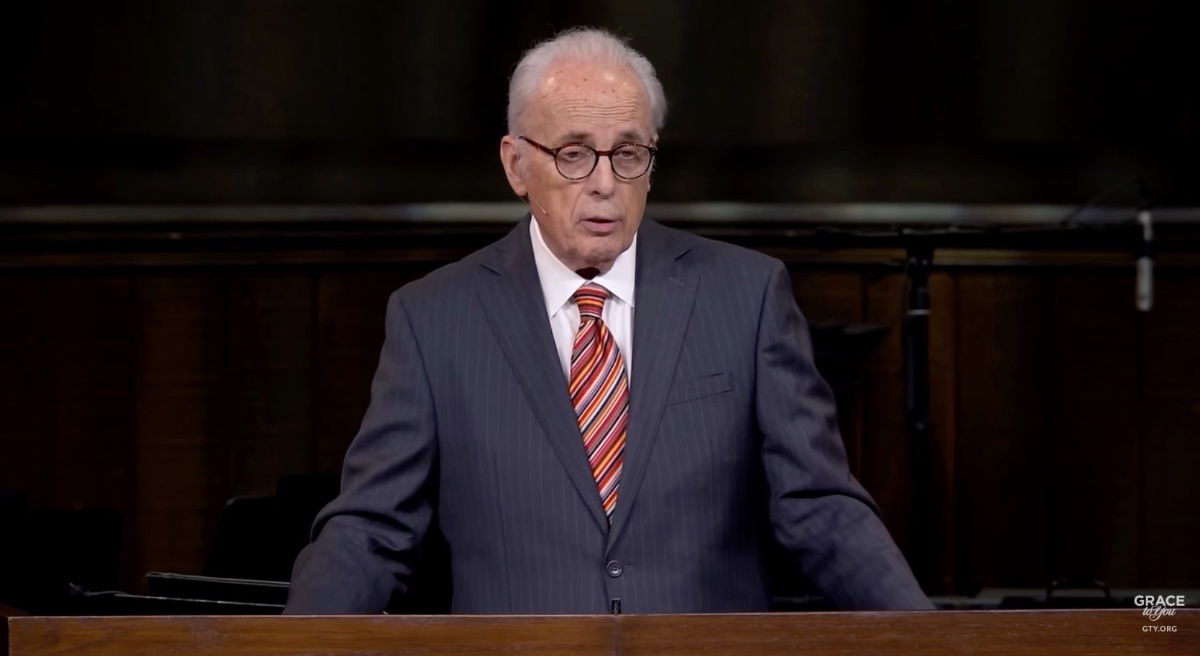
The Shepherd Who Failed His Flock: John MacArthur's Legacy
John MacArthur, the prominent Reformed pastor and Bible teacher who led Grace Community Church in Sun Valley, California for over five decades, has built one of the most influential ministries in American evangelicalism. His expository preaching shaped generations of pastors. His Study Bible sold millions of copies worldwide. His radio program "Grace to You" reached listeners in every corner of the globe. The Master's Seminary trained thousands in Reformed theology. His influence on conservative evangelicalism is difficult to overstate.
But beneath the veneer of biblical fidelity and theological precision, a darker pattern has emerged—one that threatens to define MacArthur's legacy as much as his doctrinal contributions. Multiple allegations spanning decades paint a troubling picture: a ministry culture where abuse victims were blamed, abusers were protected, and institutional reputation was prioritized over biblical justice.
This is not merely a story about one pastor's failures. It is a case study in how theological orthodoxy without pastoral compassion can become a weapon against the vulnerable. How complementarian theology can be distorted into a system that silences women and protects abusive men. And how institutional power, even in churches that claim to submit to Scripture alone, can corrupt those who wield it.
The allegations against MacArthur and GraceCommunity Church span multiple decades and involve numerous victims. Each case follows a similar pattern: a victim reports abuse, church leadership responds with counsel to submit or reconcile, the victim is subjected to church discipline when they seek protection, and the abuser faces minimal consequences. This pattern is not accidental—it is systemic, rooted in theological distortions and institutional self-protection.
What makes the MacArthur case particularly significant is the contradiction it represents. Here is a man who has spent his entire ministry defending biblical authority, teaching sound doctrine, and calling the church to faithfulness. Yet when faced with the most basic biblical mandate—to protect the vulnerable and pursue justice—the ministry has repeatedly failed. The disconnect between what is taught from the pulpit and what is practiced in pastoral care is staggering.
This investigation examines the documented cases of abuse mishandling at Grace Community Church, the theological framework that enabled these failures, the institutional responses that prioritized reputation over righteousness, and the lessons the broader evangelical church must learn if we are to prevent similar tragedies in the future.
Biblical Principle: The Standard for Shepherds
"Not many of you should become teachers, my brothers, for you know that we who teach will be judged with greater strictness." (James 3:1)
"Speak up for those who cannot speak for themselves, for the rights of all who are destitute. Speak up and judge fairly; defend the rights of the poor and needy." (Proverbs 31:8-9)
Scripture holds teachers and shepherds to the highest standard precisely because their influence is so great. A teacher who correctly explains justification by faith but enables abuse has failed the most fundamental test of Christian leadership. The church's first responsibility when abuse is reported is to protect the victim—not to counsel submission to the abuser.
I. The Eileen Gray Case: A Pattern Established
The most well-documented case involves Eileen Gray, a member of GraceCommunity Church who sought help from church leadership in the 1990s regarding her abusive marriage. What happened next would establish a pattern that would repeat itself for decades.
The Abuse and the Church's Response
Eileen Gray reported to church elders that her husband, David Gray, was physically and emotionally abusive. Rather than protecting her, church leadership—under MacArthur's direction—counseled her to submit to her husband and work on being a better wife. When she persisted in seeking help and eventually obtained a restraining order, the church responded not with support, but with discipline.
The excommunication was not a private matter handled with pastoral sensitivity. It was a public spectacle, announced from the pulpit to the full congregation. Eileen Gray was named. Her "sin" was described. And the congregation was instructed to treat her as an outsider—to withdraw fellowship, to shun her, to make clear that her decision to seek legal protection from her abuser was an act of rebellion against God's design for marriage.
The Devastating Reality
While GraceCommunity Church was publicly shaming Eileen Gray for seeking protection from her abuser, David Gray was molesting their daughter. He was later convicted of child molestation and sentenced to 21 years to life in prison.
The abuse Eileen had tried to escape was far worse than church leadership had acknowledged—and their counsel had left a child in harm's way. The church's insistence on submission and reconciliation did not preserve a marriage. It prolonged the suffering of a mother and enabled the sexual abuse of a child.
MacArthur's Continued Support of the Abuser
Even after David Gray's conviction for child molestation, MacArthur reportedly continued to support him, visiting him in prison and maintaining a relationship with the convicted abuser. Meanwhile, Eileen Gray—the victim who had sought help and been publicly shamed for it—received no apology, no acknowledgment of the church's catastrophic failure, no pastoral care for the trauma she and her daughter had endured.
The contrast is staggering. A convicted child molester received pastoral visits and ongoing relationship. The woman who tried to protect her family received public humiliation and excommunication. This is not an isolated lapse in judgment. It is a revelation of institutional priorities: the abuser is worth maintaining relationship with; the victim who disrupts institutional order is expendable.
To this day, no public apology has been issued to Eileen Gray. No acknowledgment that the church's counsel was wrong. No admission that the excommunication was an act of institutional cruelty. The silence speaks volumes about the values that govern GraceCommunity Church's approach to abuse.
Biblical Principle: The Mandate to Protect the Vulnerable
"Religion that God our Father accepts as pure and faultless is this: to look after orphans and widows in their distress and to keep oneself from being polluted by the world." (James 1:27)
The church's first responsibility when abuse is reported is to protect the victim, not to counsel submission to the abuser. When church leaders prioritize marriage preservation over victim safety, they violate Scripture's clear command to defend the vulnerable. A husband who abuses his wife has violated his covenant obligation and forfeited any claim to her submission.
II. The Paul Guay Cover-Up: When Confession Brings No Consequence
In 1979, Paul Guay—a member of GraceCommunity Church—allegedly confessed to MacArthur that he had molested a child. According to later testimony, MacArthur's response was not to report the crime to authorities, but to handle it internally through church discipline.
The Alleged Failure to Report
California law requires clergy members to report suspected child abuse to authorities. Yet according to allegations that emerged decades later, MacArthur did not report Guay's confession to law enforcement. Instead, Guay was quietly removed from ministry involvement but allowed to remain in the congregation—a decision that prioritized institutional discretion over the safety of children and the demands of justice.
The failure to report is not merely a legal violation. It is a moral failure of the highest order. When a child molester confesses his crime to a pastor, the pastor has both a legal obligation and a biblical mandate to ensure that justice is pursued. Handling the matter "internally" does not protect the victim—it protects the institution and the abuser.
Years later, when the victim sought accountability and justice, she was allegedly told by church leadership to forgive Guay and move on. When she persisted in seeking acknowledgment of what had been done to her, she was accused of being obsessed with the past and unwilling to extend Christian grace. The victim's pursuit of justice was reframed as a spiritual deficiency—her problem, not the church's.
Victim Testimony
"I was told that my desire for accountability was unbiblical. That I needed to forgive and forget. But how do you forget being molested as a child? And how is it biblical to protect a child molester from the consequences of his actions?"
— Testimony from the alleged victim, as reported in investigative journalism
The Pattern of Institutional Self-Protection
The Guay case reveals a pattern that would repeat itself throughout MacArthur's ministry: when abuse is reported, handle it internally. Protect the institution's reputation. Counsel victims to forgive and move on. Frame accountability as vindictiveness and justice-seeking as unbiblical. This pattern is not accidental—it is systemic, rooted in a theology of authority that places institutional preservation above victim protection.
The internal handling of abuse allegations serves multiple institutional purposes. It keeps the matter out of public view, protecting the church's reputation. It maintains the authority structure, ensuring that leadership decisions are not questioned. And it sends a clear message to other potential victims: if you come forward, you will be the one who suffers consequences, not your abuser.
Biblical Principle: Civil Authority and Justice
"For rulers are not a terror to good conduct, but to bad... But if you do wrong, be afraid, for he does not bear the sword in vain. For he is the servant of God, an avenger who carries out God's wrath on the wrongdoer." (Romans 13:1-4)
Church discipline and civil justice are not mutually exclusive—they are complementary. When a crime is committed, especially against a child, reporting to authorities is not optional. It is obedience to God's design for justice in society. A church that handles criminal matters internally is not exercising spiritual authority—it is obstructing justice.
III. The Lorraine Zielinski Lawsuit: The Pattern Continues
In 2024, Lorraine Zielinski filed a lawsuit against GraceCommunity Church, alleging that the church's counseling practices in response to her reports of domestic abuse were traumatic and harmful. The lawsuit describes a pattern strikingly similar to the Eileen Gray case decades earlier—demonstrating that nothing had changed.
The Allegations
According to the lawsuit, Zielinski sought help from GraceCommunity Church regarding abuse in her marriage. Rather than receiving support and protection, she was subjected to church discipline, publicly shamed, and counseled to reconcile with her abuser. The lawsuit alleges that the church's "biblical counseling" approach was not only unhelpful but actively harmful, compounding her trauma rather than addressing it.
The case is particularly significant because it demonstrates that the patterns established in the 1990s with Eileen Gray had not changed despite decades of criticism and multiple allegations of abuse mishandling. GraceCommunity Church's approach to domestic violence remained fundamentally the same: counsel submission, discipline those who seek protection, and protect the institution above all else.
The Zielinski lawsuit also highlights the role of the Association of Certified Biblical Counselors (ACBC) in perpetuating harmful counseling practices. Bill Shannon, a counselor at GraceCommunity Church, was eventually removed from the ACBC's list of approved counselors—a rare acknowledgment by the biblical counseling establishment that something had gone seriously wrong.
The Institutional Pattern
When abuse victims seek help from GraceCommunity Church, they are consistently met with:
- Counsel to submit and work on being a better spouse
- Church discipline if they seek legal protection
- Public shaming through announcements of discipline
- Pressure to reconcile with abusers
- Accusations of being unforgiving or vindictive if they persist in seeking accountability
- Removal of support systems within the church community
Biblical Principle: Christ's Warning About Causing Harm
"But whoever causes one of these little ones who believe in me to sin, it would be better for him to have a great millstone fastened around his neck and to be drowned in the depth of the sea." (Matthew 18:6)
When church leaders counsel abuse victims to remain in dangerous situations, they participate in the harm inflicted. When they publicly shame those who seek safety, they compound the trauma. Christ's words about millstones should terrify any leader who has prioritized institutional reputation over victim protection.
IV. The Theological Framework: How Complementarianism Became Cover for Abuse
To understand how these patterns persisted for decades, we must examine the theological framework that enabled them. GraceCommunity Church operates within a complementarian framework—the belief that men and women have distinct, complementary roles in marriage and church leadership. Complementarianism, when practiced biblically, affirms the equal dignity and worth of men and women while recognizing distinct roles.
But at GraceCommunity Church, complementarianism appears to have been distorted into something far more dangerous: a system where male authority is absolute and female submission is unconditional—even in the face of abuse. This distortion transforms a biblical teaching about mutual service into a weapon that silences victims and empowers abusers.
The Distortion of Biblical Submission
Scripture calls wives to submit to their husbands "as to the Lord" (Ephesians 5:22). But this submission is always qualified by the husband's call to love his wife "as Christ loved the church and gave himself up for her" (Ephesians 5:25). A husband who abuses his wife has violated his covenant obligation and forfeited any claim to her submission. Christ's love for the church was sacrificial, protective, and nurturing—the opposite of abuse.
Yet at GraceCommunity Church, submission appears to have been taught as absolute and unconditional. Women were trapped in abusive marriages by the very institution that should have been their refuge.
The Weaponization of Forgiveness
Another theological distortion evident in these cases is the weaponization of forgiveness. Victims who sought accountability were told they needed to forgive and move on. Those who pursued legal protection or criminal prosecution were accused of being unforgiving and vindictive. Forgiveness was transformed from a gift of grace into a tool of control.
But biblical forgiveness does not preclude justice. A victim can forgive her abuser while still seeking legal protection. A survivor can extend grace while still demanding accountability.
The Dangerous Teaching
When complementarianism is distorted into a system where male authority is absolute and female submission is unconditional, it becomes a theological framework that enables and protects abuse. This is not biblical complementarianism. It is patriarchy masquerading as theology. And it has devastating consequences for the vulnerable.
When forgiveness is weaponized to silence victims and protect abusers, it ceases to be a Christian virtue and becomes an instrument of oppression. The church must reclaim both complementarianism and forgiveness from those who have distorted them into tools of control.
Biblical Principle: The True Nature of Forgiveness
"Pay attention to yourselves! If your brother sins, rebuke him, and if he repents, forgive him, and if he sins against you seven times in the day, and turns to you seven times, saying, 'I repent,' you must forgive him." (Luke 17:3-4)
Notice the order: rebuke, repentance, then forgiveness. Biblical forgiveness is always paired with a call to repentance. Victims are not required to extend forgiveness to unrepentant abusers, and even when forgiveness is extended, it does not eliminate the need for justice and accountability.
V. The Internal Resistance: Hohn Cho's Resignation
In 2022, Hohn Cho—a longtime elder at GraceCommunity Church—resigned from leadership, citing concerns about the church's handling of abuse allegations and MacArthur's response to internal accountability efforts. His departure represented a significant loss—not just of one elder, but of internal voices calling for reform and accountability.
The Internal Investigation
According to reports, an internal investigation had been conducted into the church's handling of abuse cases. The investigation—conducted by people within the church's own leadership structure—concluded that the church had acted wrongly in several instances and recommended changes to policies and practices. This was not an outside critic making accusations. This was the church's own accountability mechanism identifying serious failures.
MacArthur's reported response to the investigation's findings? "Forget it."
This two-word dismissal reveals the heart of the problem. When internal accountability mechanisms identify failures and recommend reforms, but the senior leader simply refuses to implement them, the entire system of accountability collapses. Power without accountability is tyranny, even when that power is exercised from behind a pulpit. Even when the tyrant can parse Greek verbs and explain the ordo salutis.
The Departure of Institutional Conscience
In his resignation, Cho reportedly expressed deep concern about the church's trajectory and MacArthur's unwillingness to address systemic problems. His departure was not a casual disagreement over secondary issues. It was a principled stand against institutional corruption by someone who had invested years of his life in the church's leadership.
When those inside the system who know the truth and have the courage to speak it are silenced or driven out, the institution becomes increasingly resistant to reform. Each departure of a truth-teller makes the next departure more likely and the institution more insular. What remains is a leadership culture of loyalty and compliance, where the only voices heard are those that affirm the status quo.
The Cost of Silencing Internal Accountability
"When those inside the system who know the truth and have the courage to speak it are silenced or driven out, the institution becomes irredeemably corrupt. Hohn Cho's resignation was not just one man leaving—it was the departure of institutional conscience."
The pattern is familiar across institutional abuse scandals: those who raise concerns are marginalized, and those who remain learn that silence is the price of belonging. The result is an institution that cannot self-correct—because everyone capable of correction has been removed.
Biblical Principle: The Value of Faithful Wounds
"Better is open rebuke than hidden love. Faithful are the wounds of a friend; profuse are the kisses of an enemy." (Proverbs 27:5-6)
Leaders who surround themselves only with yes-men and drive out those who offer correction are not strong—they are foolish. The willingness to receive rebuke is a mark of wisdom and humility. MacArthur's reported dismissal of internal accountability efforts reveals a dangerous pride that Scripture consistently warns against.
VI. The Institutional Response: Denial, Deflection, and Defiance
Throughout decades of allegations, GraceCommunity Church's response has followed a consistent pattern: deny wrongdoing, deflect criticism, and frame accountability efforts as persecution. This three-part strategy has proven remarkably effective at insulating the institution from meaningful reform.
Official Statements
When allegations surface, the church typically issues statements defending its practices, emphasizing its commitment to biblical counseling, and suggesting that critics misunderstand or misrepresent what occurred. Rarely do these statements acknowledge specific failures or offer apologies to victims. The language is carefully crafted to express concern without admitting fault—a corporate communications strategy dressed in theological language.
The Persecution Narrative
MacArthur and GraceCommunity Church have often framed criticism as persecution—an attack by a hostile culture on faithful biblical teaching. This narrative serves a dual purpose: it deflects legitimate accountability while rallying supporters to defend the ministry against perceived enemies. When criticism is recast as persecution, the critic becomes the villain and the institution becomes the victim.
But there is a profound difference between persecution for righteousness and accountability for wrongdoing. When abuse victims come forward, they are not persecutors—they are witnesses. When journalists investigate allegations, they are not enemies—they are doing their job. And when fellow believers call for reform, they are not attacking the faith—they are defending it.
The persecution narrative is particularly insidious because it exploits genuine biblical teaching about suffering for Christ. Scripture does promise that faithful believers will face opposition. But it also warns against leaders who use spiritual language to avoid accountability. The test is simple: is the criticism directed at your faithfulness to Christ, or at your failure to protect the vulnerable? If the latter, it is not persecution—it is prophetic rebuke.
The Danger of the Persecution Narrative
When leaders frame all criticism as persecution, they create an environment where legitimate accountability becomes impossible. Victims are recast as attackers. Whistleblowers become enemies. Journalists become agents of Satan. And the institution becomes untouchable—not because it is righteous, but because it has made questioning itself a sin.
VII. The Broader Context: MacArthur's Controversial Positions
The abuse mishandling allegations do not exist in isolation. They are part of a broader pattern of controversial positions and statements that reveal MacArthur's approach to authority, women, and institutional accountability.
The "Go Home" Comment to Beth Moore
In 2019, MacArthur participated in a panel discussion where he was asked for one word to describe Beth Moore, a prominent Bible teacher. His response: "Go home." The audience laughed. MacArthur elaborated, suggesting that Moore should stop teaching and return to her domestic duties.
The comment was widely criticized as dismissive and demeaning. But it also revealed something deeper: a view of women's roles that reduces them to domestic functions and dismisses their gifts and callings. This same view appears to underlie the church's response to abuse victims—women who speak up are out of place, and their proper role is silent submission, regardless of the circumstances.
Mental Health and "Noble Lies"
MacArthur has been a vocal critic of modern psychology and mental health treatment, arguing that biblical counseling is sufficient for all emotional and psychological struggles. In some contexts, he has suggested that diagnoses like PTSD or clinical depression are "noble lies"—socially acceptable excuses for what is fundamentally a spiritual problem.
This approach has devastating implications for abuse survivors, who often struggle with trauma-related mental health conditions including PTSD, anxiety, depression, and complex trauma responses. When church leaders dismiss these conditions as spiritual problems requiring only biblical counsel, they compound the harm and prevent victims from receiving appropriate professional care. The result is a system where the most wounded members of the congregation are denied the help they desperately need.
COVID-19 Defiance
During the COVID-19 pandemic, GraceCommunity Church defied public health orders and continued holding indoor services. MacArthur framed this as a stand for religious liberty and faithfulness to the biblical command to gather for worship. While reasonable Christians disagreed about the appropriate response to pandemic restrictions, MacArthur's defiant approach revealed a consistent pattern: when civil authorities or external voices call for compliance or accountability, the response is resistance framed as faithfulness.
The COVID defiance is relevant to the abuse cases because it demonstrates the same institutional posture: external accountability is treated as an attack on the church's autonomy. Whether the external voice is a public health department, a victim seeking justice, or a journalist investigating allegations, the response is the same—resistance, framed in theological language, presented as faithfulness to God.
VIII. The Legacy Question: Can We Separate the Teaching from the Teacher?
MacArthur's theological contributions are significant. His Study Bible has helped millions understand Scripture. His preaching has shaped pastoral ministry worldwide. His defense of biblical authority has strengthened the church's confidence in God's Word. These contributions are real and should not be dismissed.
But can we separate these contributions from the teacher's failures? Can we recommend the Study Bible while remaining silent about the study's author's treatment of abuse victims?
The Biblical Standard for Teachers
Scripture holds teachers to a higher standard precisely because their influence is so great. James 3:1 warns: "Not many of you should become teachers, my brothers, for you know that we who teach will be judged with greater strictness." A leader who fails these character tests is disqualified from leadership, regardless of his doctrinal precision or ministry success. The church must recover the biblical conviction that character is not separate from calling—it is the foundation of it.
IX. What Must Change: Lessons for the Church
The MacArthur case offers painful but necessary lessons for the broader evangelical church. If we are to prevent future failures, several fundamental changes must occur:
1. Victim Safety Must Be the First Priority
When abuse is reported, the church's first response must be to ensure the victim's safety—not to preserve the marriage, not to protect the institution, not to counsel forgiveness. This may mean helping victims obtain legal protection, connecting them with professional counseling, and supporting them in reporting crimes to authorities. Marriage preservation is never more important than victim safety. Never.
2. Complementarianism Must Not Become Cover for Abuse
Churches that hold to complementarian theology must be vigilant against its distortion. Biblical submission is never absolute or unconditional. A husband who abuses his wife has violated his covenant and forfeited any claim to her submission. Women who seek protection from abuse are not in rebellion—they are exercising wisdom and self-preservation. Churches must teach this clearly and consistently.
3. Biblical Counseling Must Be Trauma-Informed
Biblical counseling is valuable and necessary. But it must be informed by an understanding of trauma and its effects. Abuse survivors often need professional mental health care in addition to spiritual counsel. Churches that dismiss psychology entirely do a disservice to those who are suffering. God's common grace extends to the field of mental health, and refusing to acknowledge this is not faithfulness—it is negligence.
4. Institutional Accountability Must Be Real
Churches need external oversight that is truly independent—not boards of friends and loyalists, but qualified individuals with the authority to investigate allegations and enforce discipline. When internal accountability mechanisms identify failures, leaders must implement recommended reforms, not dismiss them with "forget it." A leader who refuses accountability has disqualified himself from leadership.
5. Transparency Must Replace Self-Protection
When allegations arise, churches must respond with transparency, not defensiveness. Acknowledge failures. Apologize to victims. Implement reforms. The church's witness is not protected by covering up sin—it is protected by dealing with sin honestly and biblically. The call to expose darkness is not a call to destroy the church—it is a call to purify it.
Biblical Principle: God's Judgment on Unfaithful Shepherds
"Ah, shepherds of Israel who have been feeding yourselves! Should not shepherds feed the sheep? You eat the fat, you clothe yourselves with the wool, you slaughter the fat ones, but you do not feed the sheep. The weak you have not strengthened, the sick you have not healed, the injured you have not bound up, the strayed you have not brought back, the lost you have not sought, and with force and harshness you have ruled them." (Ezekiel 34:2-4)
God's standard for shepherds is clear: they exist to serve the flock, not themselves. They are called to strengthen the weak, heal the sick, and protect the vulnerable. When shepherds fail in these fundamental duties, they face God's judgment—regardless of their theological precision or ministry success. The Good Shepherd laid down His life for the sheep. He calls all under-shepherds to do the same.
The path forward requires more than policy changes and accountability structures—though those are necessary. It requires a return to the heart of the gospel: that God cares deeply for the vulnerable, that justice and mercy are not opposites but partners, and that leaders are called to serve, not to rule.
May the church learn from MacArthur's failures. May we prioritize victim protection over institutional reputation. May we hold leaders accountable, regardless of their influence. And may we never forget that the Good Shepherd laid down His life for the sheep—and calls all under-shepherds to do the same.
How You Can Respond
Pray
Pray for victims of spiritual abuse and for genuine reform in churches that have prioritized reputation over righteousness. Pray for courage for those who are speaking truth to power.
Examine
Examine your own church's approach to abuse allegations. Are victims protected? Are abusers held accountable? Is there real external oversight? If not, advocate for change.
Support
Support organizations working to reform church abuse response, such as GRACE (Godly Response to Abuse in the Christian Environment) and other survivor advocacy groups.
Reject Celebrity Pastor Culture
Evaluate all leaders—regardless of their influence—by biblical standards of character and fruit. No teacher is above accountability. No ministry is too important to question.
Be a Berean
Study Scripture's teaching on leadership, accountability, and the protection of the vulnerable. Test everything against God's Word—including the practices of your own church and its leaders.
Share This Investigation
More Investigations

The Fall of a Reformed Prince: Steven Lawson's Five-Year Deception and the Calvinist Reckoning
One of Reformed theology's most celebrated preachers confesses to a five-year affair with a woman 50 years his junior. As institutions sever ties and silence stretches on, critics ask: Does Calvinist doctrine itself enable moral failure?
Spiritual Father, Sexual Predator: Bethel's Ben Armstrong Accused of Grooming and Assault
A former BSSM student alleges the Director of Prophetic Ministry used "spiritual fatherhood" to groom and sexually assault her in 2009, while Bethel dismissed it as a consensual "moral failure."

False Profit: How the House of Prayer Defrauded Military Veterans of $22 Million
Eight leaders indicted in a decades-long scheme siphoning GI Bill benefits, orchestrating real estate fraud, and wielding cult-like control over veterans near military bases.